North Vancouver Real Estate Market Update: August 2026
Greater Vancouver's housing market cooled further in August, and North Vancouver moved with it. Here is what the latest data actually shows, told in plain terms, and what it means if you are planning to buy in the coming months.
Where prices sit against the pandemic-era boom
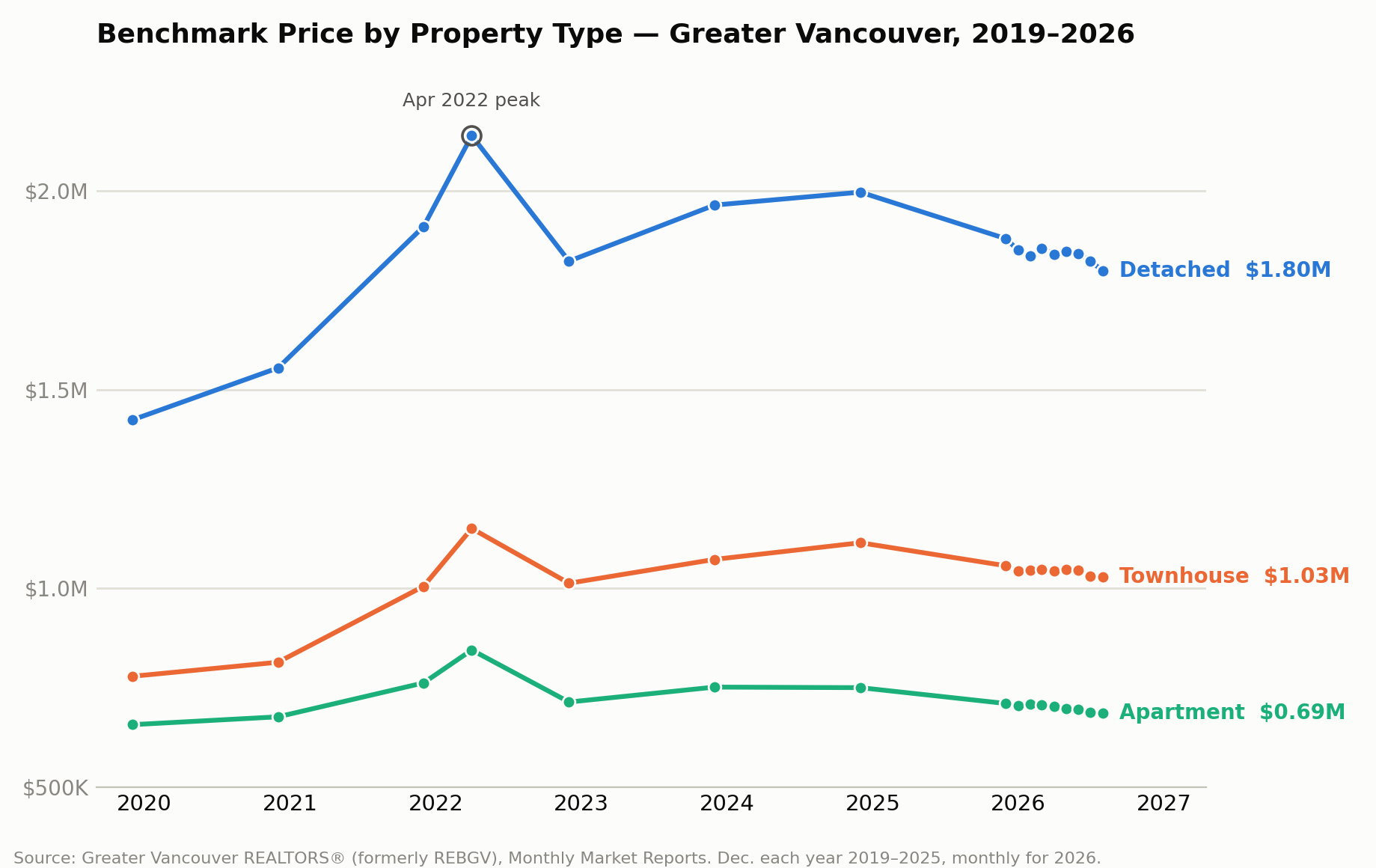
The benchmark price, a measure that tracks a "typical" home rather than the average of every sale, tells a clear story once you follow it back to before the pandemic. Detached homes benchmarked at $1,423,500 in December 2019, according to Greater Vancouver REALTORS® and REBGV monthly market reports covering 2019 through 2026. That benchmark climbed through the pandemic to a peak of $2,139,200 in April 2022, an increase of roughly 50 percent in under two and a half years, before Bank of Canada rate hikes triggered a sharp correction. By August 2026, the detached benchmark sat at $1,799,400, which is about 16 percent below that April 2022 peak, but still roughly 26 percent above where it started in December 2019. Townhouses and apartments moved through the same three phases, boom, correction, partial recovery, on a smaller scale: townhouses ran from $778,400 to a $1,150,500 peak and now sit at $1,028,800, while apartments ran from $656,700 to an $844,700 peak and now sit at $686,200, essentially back to their pre-pandemic level.
The practical read: today's prices are meaningfully cheaper than the 2022 peak, especially for detached homes, but they haven't round-tripped all the way back to pre-pandemic levels except in the apartment segment, which has given back nearly all of its pandemic-era gain.
How this year compares to the last seven
Sales volume shows the same cycle even more sharply. Greater Vancouver recorded 43,999 home sales in 2021, the record year of the pandemic boom, more than 70 percent above 2019's 25,351. Sales then fell for three straight years, and 2025 closed at just 23,800 sales, the lowest annual total in more than two decades according to GVR. Through the first eight months of 2026, sales total 15,367, a pace that puts this year on track to land in a similar range to 2025 if the rest of the year holds, though a partial-year figure is not a reliable predictor of where the full year ends up.
What's happening right now
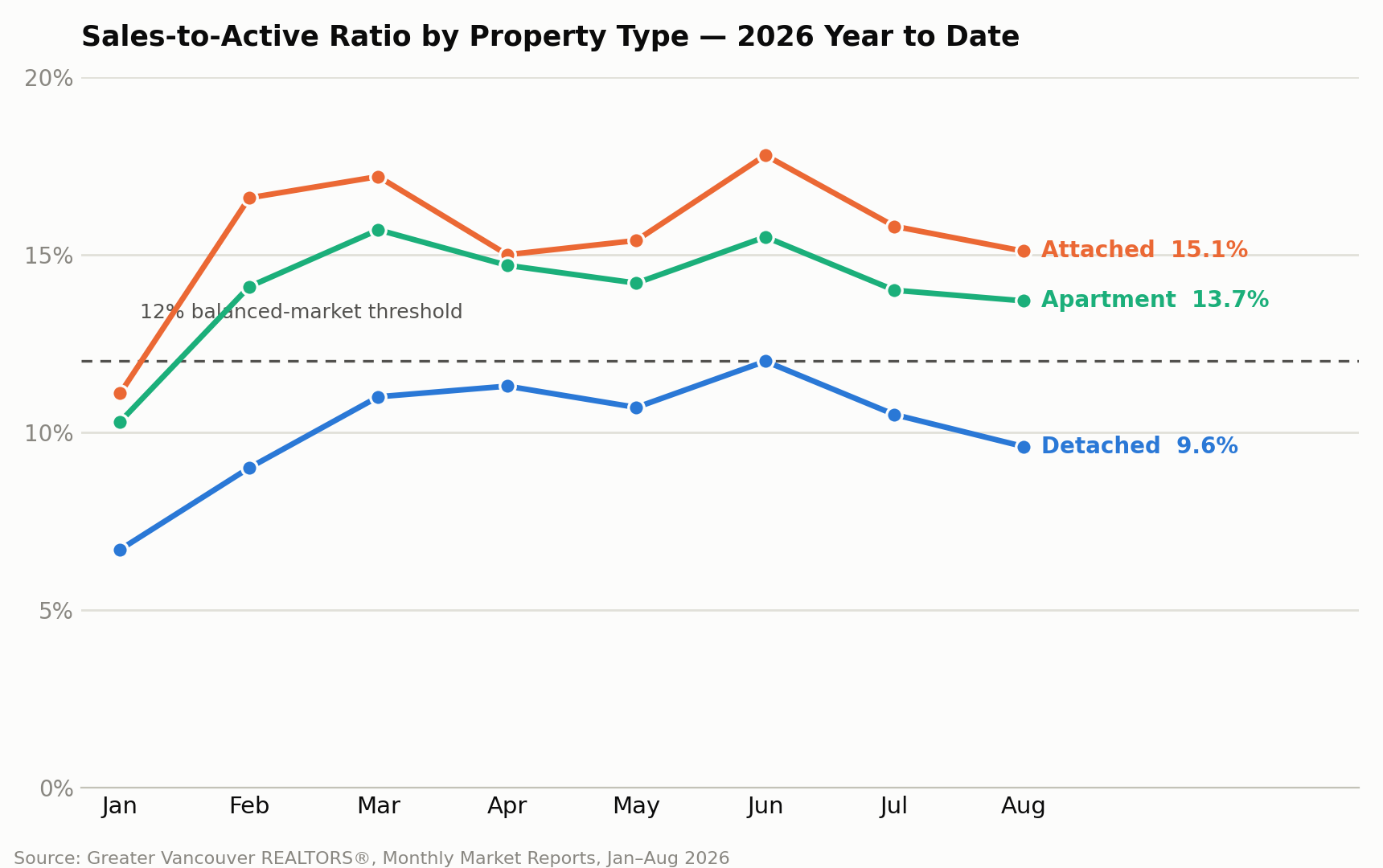
Zooming back in to this year specifically, the sales-to-active ratio, which measures what share of current inventory is actually selling each month, rose from January through a June peak and has eased for two months since. Andrew Lis, the board's chief economist, has pointed out that when this ratio sits below 12 percent for a sustained stretch, it tends to put ongoing downward pressure on prices, since sellers are forced to compete on price to attract the buyers who are still active. Detached homes crossed below that 12 percent line in July and sat at 9.6 percent in August, which lines up with detached also having the steepest price pullback of the three property types this year. Attached homes and apartments have stayed above the threshold all year, consistent with their smaller declines.
Rates are holding, for now
On the same day GVR released its August figures, the Bank of Canada held its policy rate at 2.25 percent, leaving borrowing costs unchanged from its previous decision. That stability matters more for buyers who are actively shopping than it does for the market overall: it means anyone pre-approved right now isn't working against a moving target this month. It isn't, on its own, a signal that mortgage rates are about to fall. Posted and discounted rates still vary by lender independent of the Bank's policy rate, so it's worth comparing options directly. If you are looking at getting pre-approved for a mortgage please reach out to me and I will happily connect you with a Broker.
What this means if you are a first-time buyer
The seven-year view changes the takeaway from "prices are down a bit this month" to something more specific: detached homes have given back the most ground since the 2022 peak and currently have the most negotiating room, apartments have already round-tripped nearly all the way back to pre-pandemic pricing, and the overall pace of the market this year looks a lot like 2025's slow year rather than a rebound. For prices to climb significantly there needs to be a major catalyst which is unexpected over the next few years.